When to Choose a DAP Over an LMS for Employee Training
Digital Adoption Platforms (DAPs) and Learning Management Systems (LMSs) are frequently compared, but they serve fundamentally different purposes. Understanding when to use each - and how they complement each other - is essential for building an effective employee training strategy.
DAP vs. LMS: Core Differences
| Dimension | Digital Adoption Platform (DAP) | Learning Management System (LMS) |
|---|---|---|
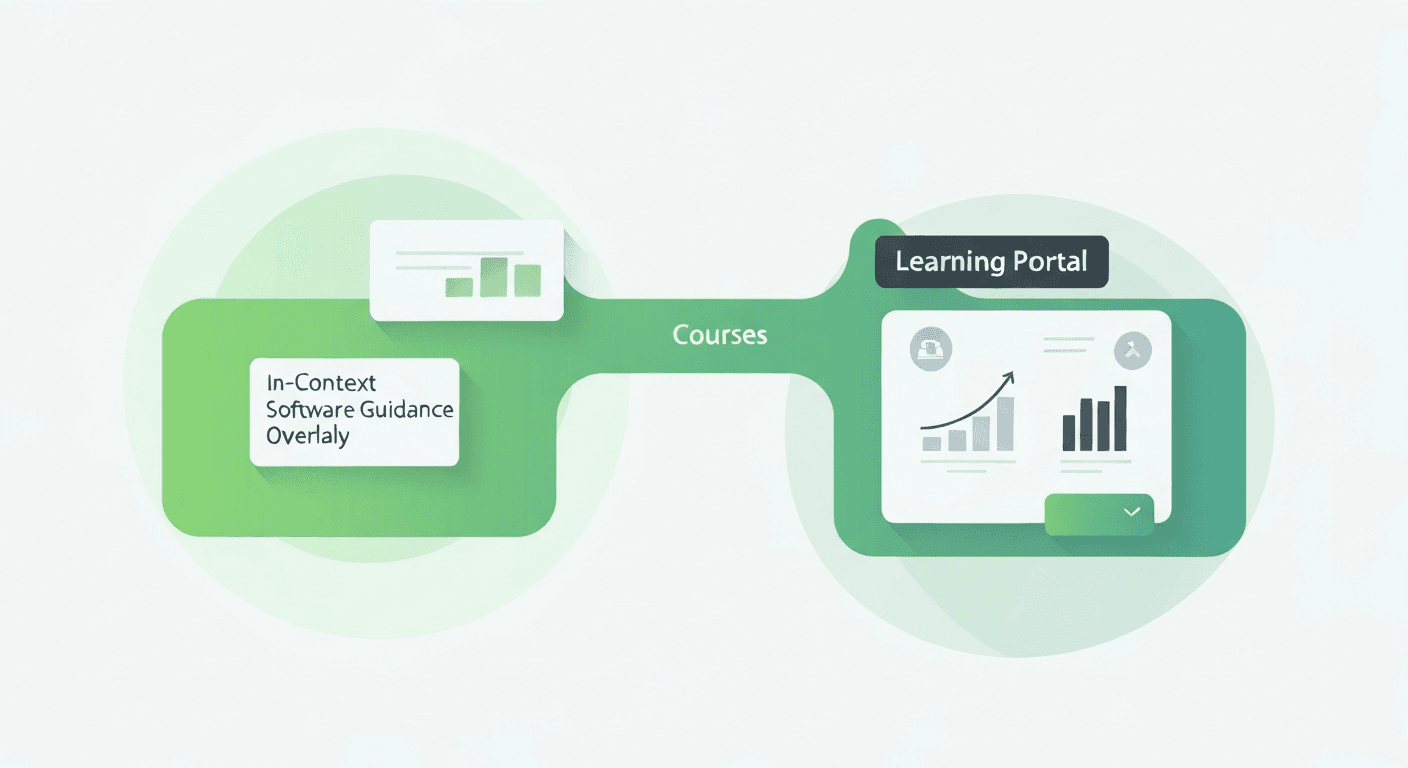
| Primary purpose | In-context software guidance | Course management and delivery |
| Where learning happens | Inside the target application | In a separate learning portal |
| Content format | Interactive walkthroughs, tooltips, chatbot | Courses, videos, quizzes, SCORM modules |
| Learning approach | Just-in-time, contextual | Scheduled, structured curriculum |
| Best for | Software task training, onboarding, change management | Compliance courses, certifications, conceptual learning |
| Analytics focus | Feature utilization, task completion, adoption rates | Course completion, quiz scores, certification status |
| Content creation | No-code visual editor, minutes per workflow | Instructional design, hours to days per course |
| Maintenance | Quick updates when software changes | Course redesign on major updates |
When to Choose a DAP
- Your primary training need is software adoption - helping users navigate and use enterprise applications
- You need to scale training across thousands of users on platforms like Salesforce, Workday, or SAP
- Your software changes frequently and training content must stay current
- You want to reduce support tickets with self-service in-app guidance
- You need to support change management for software migrations or upgrades
When to Choose an LMS
- Your primary need is formal learning programs with courses, certifications, and assessments
- You must track compliance training completion for regulatory requirements
- Your training covers conceptual topics (leadership, safety, policies) not tied to specific software
- You need SCORM/xAPI compatibility with third-party content providers
- Your organization requires formal certification tracking with expiration and renewal
The Complementary Approach
The most effective employee training programs use both:
- LMS for foundational learning: Company policies, compliance courses, conceptual training, certifications
- DAP for software skills: In-app walkthroughs, task-specific guidance, self-service support, adoption analytics
- Integration: Link LMS course completions to DAP walkthrough assignments for a seamless learning journey
Bottom line: DAPs and LMSs are not competitors - they are complementary tools for different types of learning. A DAP excels at in-context software training; an LMS excels at structured curriculum delivery. Most enterprises need both.