How to Deflect Support Tickets with Self-Service In-App Guidance
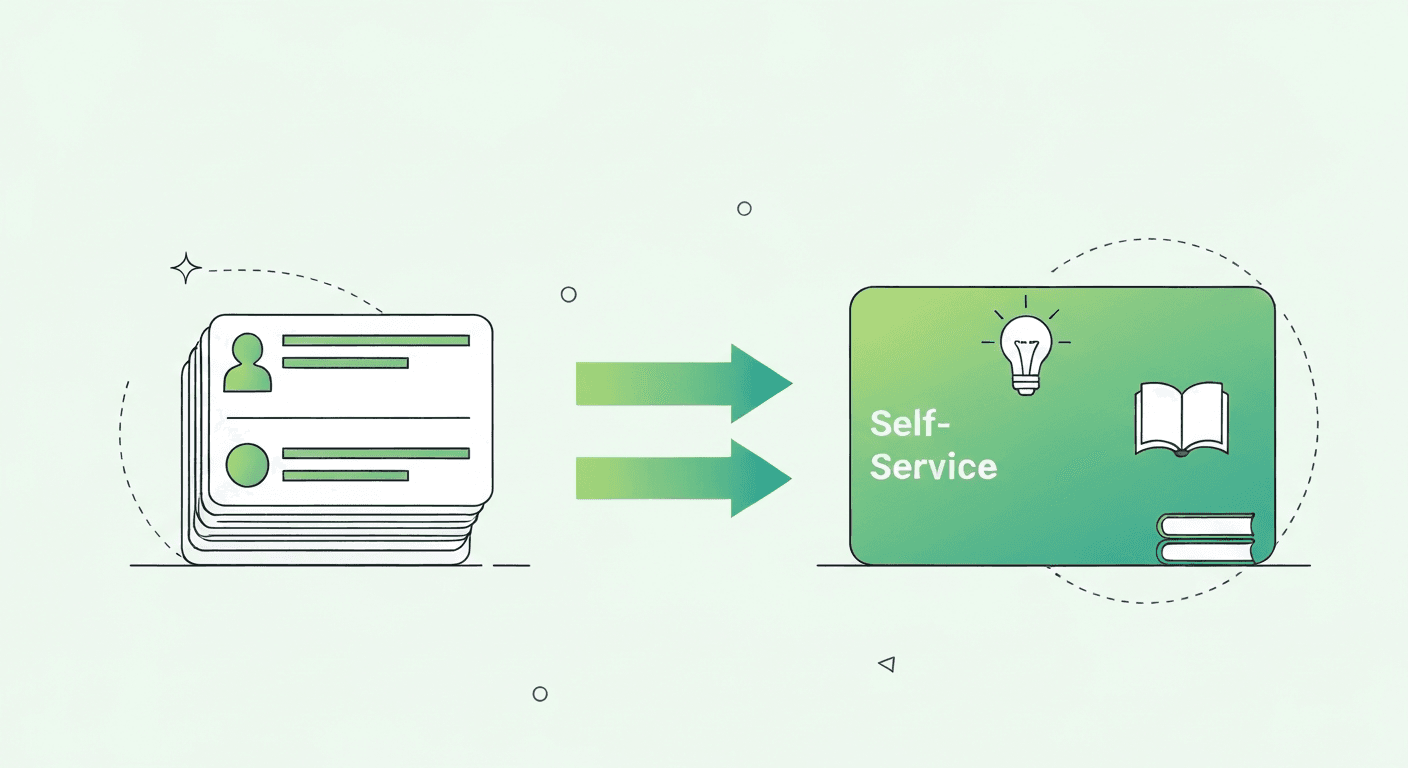
Support ticket deflection is one of the highest-ROI applications of a digital adoption platform. Every ticket that users resolve themselves - through in-app guidance, a knowledge base, or an AI chatbot - saves time, money, and frustration for both the user and the support team.
The Cost of a Support Ticket
The average enterprise IT help desk ticket costs $15.56 to resolve. For organizations processing thousands of tickets per month, the math is compelling:
| Monthly Ticket Volume | Annual Cost | 40% Deflection Savings | 70% Deflection Savings |
|---|---|---|---|
| 1,000 | $186,720 | $74,688 | $130,704 |
| 5,000 | $933,600 | $373,440 | $653,520 |
| 10,000 | $1,867,200 | $746,880 | $1,307,040 |
The Three Layers of Self-Service Deflection
Layer 1: Proactive In-App Walkthroughs
The most effective ticket deflection happens before the user even realizes they need help. Proactive walkthroughs that trigger automatically for first-time users, new feature releases, or commonly confused processes prevent the confusion that leads to tickets.
Layer 2: Searchable Knowledge Base
When users encounter an issue, their first instinct should be to search - not to file a ticket. A searchable, in-app knowledge base that surfaces relevant walkthroughs, help articles, and FAQs empowers users to self-resolve.
Layer 3: AI Chatbot
For questions that don't have a pre-built walkthrough, an AI chatbot powered by RAG can synthesize answers from your documentation in real time. The chatbot handles the long tail of questions that would otherwise become tickets.
Implementation Roadmap
- Analyze your ticket backlog: Categorize the last 90 days of tickets by type. Identify the top 20 most common how-to questions
- Build walkthroughs for the top 20: These walkthroughs will deflect the highest volume of tickets
- Deploy the knowledge base: Ensure it is searchable from within the application, not on a separate portal
- Add the AI chatbot: Ingest your documentation and train the chatbot on your specific domain
- Measure deflection rate: Track the ratio of self-service resolutions to submitted tickets
- Iterate monthly: New tickets reveal new content gaps. Create walkthroughs for emerging patterns
Measuring Deflection Success
- Deflection rate: (Self-service resolutions) / (Self-service resolutions + Submitted tickets). Target: >50%
- Ticket volume trend: Monthly ticket volume should decrease over time as self-service improves
- Mean time to resolution: Self-service resolutions are instant; track overall MTTR improvement
- User satisfaction: Survey users about their self-service experience. Target: >4.0/5
Bottom line: Ticket deflection is not about making it harder to contact support - it is about making it easier to find answers without needing to. The combination of proactive walkthroughs, a searchable knowledge base, and an AI chatbot creates a self-service ecosystem that saves money and improves the user experience simultaneously.